Wisdom teeth tend to cause uncertainty rather than sudden drama. For many patients, the discomfort starts quietly: a dull ache, a bit of swelling, or a feeling that something “isn’t quite right” at the back of the mouth. Then it settles and suddenly weeks later, it returns.
At Knighton Dental, this pattern is very familiar. Impacted wisdom teeth are one of the most common issues we assess, particularly in late teens and adults in their twenties. Understanding what’s normal, what isn’t, and when to act can make a big difference: both for comfort and long-term oral health.
Wisdom teeth are the last adult teeth to develop. They usually appear between the ages of 17 and 25, long after the jaw has finished growing. For some people, there is enough room for them to come through normally and cause no problems at all.
For many others, there simply isn’t enough space.
When a wisdom tooth cannot erupt fully into the correct position, dentists describe it as impacted. This doesn’t automatically mean treatment is required, but it does mean the tooth needs monitoring.
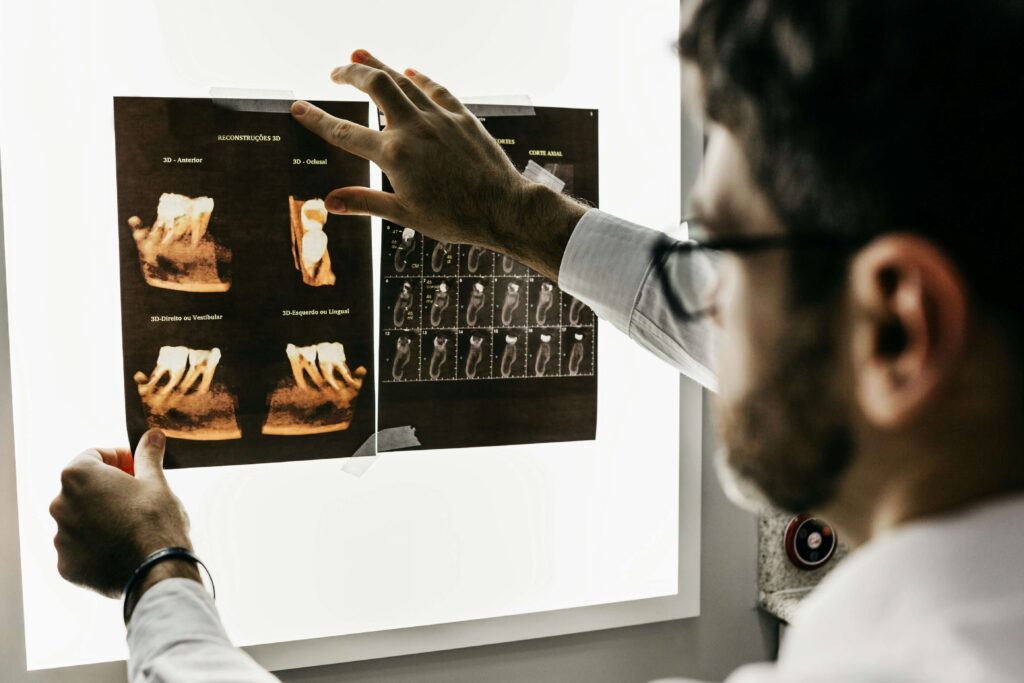
Not everyone feels their wisdom teeth coming through. Some never erupt at all. Others sit hidden beneath the gum and bone, causing no symptoms for years.
The only reliable way to know whether you have wisdom teeth and whether they are impacted is with a dental X-ray. At Knighton Dental, we commonly use panoramic X-rays to assess their position and check how close they are to neighbouring teeth and nerves.
Wisdom tooth pain rarely starts suddenly. More often, patients describe a low-level ache that comes and goes, usually at the back of the jaw. This can happen when the tooth begins to push against surrounding tissue or when bacteria collect around a partially erupted tooth.
It’s common for the discomfort to ease on its own, which is why many people delay seeking advice. However, recurring pain is often a sign that the underlying issue hasn’t resolved- it’s simply settled temporarily.
An impacted wisdom tooth is one that cannot come through properly because something blocks its path. This might be the jawbone, the gum, or another tooth.
In practice, impacted wisdom teeth are often angled forwards, backwards, or sideways. Some remain fully under the gum. Others break through only partially, leaving a small flap of gum that is difficult to clean.
On X-rays, these teeth often appear stable but poorly positioned. While they may remain quiet for a time, they are more likely to cause repeated inflammation or infection.
Problems related to wisdom teeth don’t always feel severe, but they do tend to repeat. Patients often report swelling at the back of the jaw, tenderness when chewing, or gum irritation that flares up every few months.
Other signs can include a persistent bad taste, difficulty opening the mouth fully, or pain that seems to spread towards the ear or temple. These symptoms are commonly linked to inflammation around the tooth, a condition known as pericoronitis.
This is a concern we hear frequently. If you feel as though you are constantly catching your cheek when chewing, or if there is a sore area that doesn’t seem to heal, the wisdom tooth may be erupting at an awkward angle.
In some cases, the issue isn’t the tooth itself but swollen gum tissue around it. Either way, repeated irritation can lead to inflammation and infection, particularly if the area is hard to keep clean.
Symptoms can suggest impaction, but they don’t confirm it. Some impacted wisdom teeth cause no discomfort at all, while others lead to repeated flare-ups.
Patterns we often see include recurring pain, swelling that returns during periods of stress or illness, and difficulty brushing the area properly. An examination combined with X-rays provides clarity and allows us to advise accurately.
No. This is an important point.
If a wisdom tooth is fully erupted, sits in a healthy position, and can be cleaned effectively, removal may not be necessary. Many patients keep their wisdom teeth for life without issue.
However, impacted wisdom teeth that cause repeated infections, damage neighbouring teeth, or lead to ongoing discomfort often benefit from removal. The decision is always based on clinical findings, symptoms, and long-term risk — not a one-size-fits-all rule.
If you’re unsure whether your wisdom tooth needs treatment, a simple assessment can usually provide clarity. At Knighton Dental, we regularly review wisdom teeth that are causing intermittent discomfort and advise whether monitoring or treatment is the most sensible option.
If discomfort keeps returning, even if it settles each time, it’s worth having it checked. Swelling that lasts more than a few days, difficulty opening your mouth, or signs of infection should always be assessed promptly.
Early evaluation often means simpler treatment and fewer complications.
A wisdom tooth assessment is straightforward. We examine the area clinically, take X-rays if needed, and discuss what we see in clear terms.
Sometimes the best approach is monitoring. In other cases, treatment may be recommended to prevent repeated problems. Either way, you’ll understand what’s happening and why.
Many patients feel anxious when wisdom tooth removal is mentioned. In reality, modern techniques make the process far more comfortable than expected. Recovery is usually manageable with clear aftercare advice, and most patients are relieved once the source of recurring pain is addressed.
For additional guidance, these sources provide reliable information:
Wisdom teeth don’t always cause problems, but when they do, the symptoms tend to repeat rather than disappear completely. A calm assessment can provide reassurance, clarity, and — when needed — a plan that prevents future discomfort.
Wisdom tooth pain often comes and goes, which makes it easy to put off getting it checked. If symptoms keep returning, booking a consultation can prevent repeated flare-ups and protect the surrounding teeth.
If something doesn’t feel right at the back of your mouth, it’s worth checking. Often, that simple step brings peace of mind.
Back to Blog
We are proud to help our valued patients to transform their smiles through a wide choice of general and cosmetic dental treatments.
Our TreatmentsWe ensure an exceptional patient journey – from start to finish.
learn moreDelivering life-changing smiles and ensuring excellent dental health.
learn moreDental implants and us – together we can recreate a naturally beautiful smile.
learn more Our partners